Forbidden memory
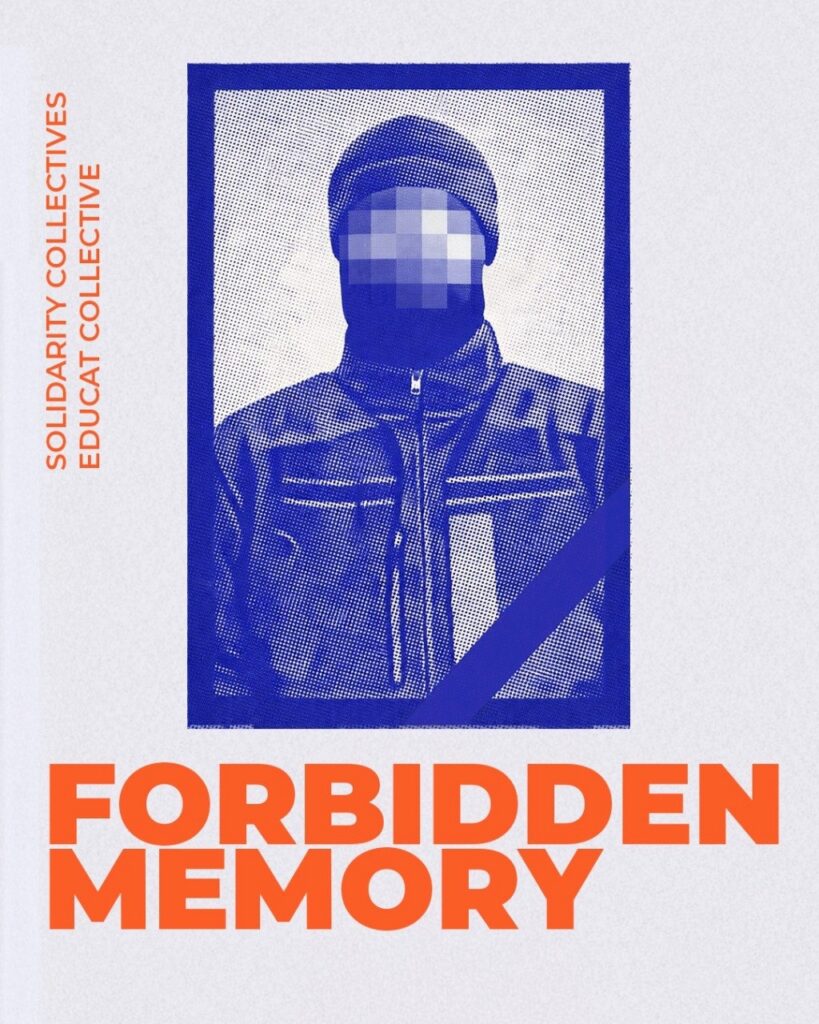
It is always difficult to describe the feelings of devastation, anger, injustice, and grief that set in when you learn of the death in war of someone you knew. In such moments, a culture of remembrance and the archiving of the life stories of the fallen help to record and preserve their ideas and values, and to come to terms with the loss on both a personal and a collective level. But what happens when memory becomes a tool of repression?
One such case is that of volunteers from belarus and russia who are fighting on Ukraine’s side. Their stories are often forced to remain private, fragmentary, or anonymous, as any public exposure could be used by the regimes as a pretext for repressing their families and loved ones.
In this interview, a Belarusian volunteer soldier shared his own vision for honouring the memory of the fallen Belarusians.
This interview is part of the Decolonising Cultures of Remembrance project. It was produced in partnership with the Educat Collective.
Let’s start with what is perhaps the main problem Belarusians face when someone dies. The issue is not with commemorating the deceased per se, but with the Ukrainian state’s attitude towards this matter — namely, that relatives are unable to receive any compensation in the event of the death or disappearance of a Belarusian volunteer.
This is because in the autumn of 2022, a populist decision was taken which the authorities have still not been able to revoke. It seemed intended to prevent only those actually residing in Russia and Belarus from receiving money, but in reality, the Ukrainian wives of Belarusian volunteers do not receive it either. I don’t know what the situation is for Russian volunteers, but I imagine it’s the same there. Of course, we didn’t come here for compensation for our loved ones, but this is a very telling indication of the Ukrainian state’s attitude towards Belarusians and Russians fighting on Ukraine’s side.
And the second problem, which is directly linked to memorialisation, is the attitude of the Belarusian authorities towards Belarusian volunteers fighting on Ukraine’s side. It is not just sharply negative; they hate and fear us. So we are seen by the authorities as enemy number one. Because any Belarusian with a weapon in their hands is a terrible threat to Lukashenko’s authoritarian, semi-fascist regime.
For example, the Kastuś Kalinoŭski Regiment — the largest and most high-profile Belarusian unit, and one which, sadly, has suffered the highest number of casualties — is recognised as a terrorist organisation in Belarus. So any contact with us can be severely punished by the authorities — that’s 10, 15, 20 years in prison. Since they can’t get to us, they attack the families of the volunteers. And the regime, generally speaking, makes no exceptions. Regardless of whether you maintain contact with your relatives, they can still become victims of repression. So, to avoid putting their families at risk, a lot of Belarusian volunteers conceal their faces and identities.
Being a Belarusian fighter with an open face is, in a sense, a privilege, but one that also brings with it a lot of problems due to the intense pressure on people close to us.
And so we come to the main question: what, then, should be done with the Belarusians who died in the war and whose faces were hidden?
There are several options. The most common is when no information is published about the deceased. Kalinoŭski’s regiment integrated this practice – I don’t know about other Belarusian units, as there are several of them – but what regiment does: they publish a picture of a person, blacked out so that only the outline remains, along with their call sign.
And this was used only in cases where it could be disclosed, because, unfortunately, among our comrades there were people whose even call signs could not be revealed, as this would immediately put their families at risk. So the first and most important rite, one might say, of Belarusian remembrance is the creation of these anonymous posts about the fallen.
It happens that when the Belarusian security forces find out about someone’s death, their face may be revealed after some time. It happens that unscrupulous journalists, in their pursuit of a scoop, foolishly publish a person’s real identity details, where and how they died, and find their social media accounts, putting the deceased’s relatives at risk.
There are also cases where people were forced to flee Belarus simply because security forces came looking for them after learning of the deceased, and only then could a photograph be shown. And there are many such cases.
And unfortunately, many of our comrades currently remain anonymous, and only when the political regime in Belarus changes and the persecution of volunteers’ families ceases will it be possible to openly name these people.
Another peculiarity: most often, Belarusian volunteers are cremated, but their ashes cannot be transferred to Belarus. This is a huge problem. These people are either buried in columbarium, if permission is granted by their relatives, or we simply wait until a relative is able to come and collect the urn.
And given that Belarus is de facto at war with Ukraine, people do not have that option. Even if they manage to enter Ukrainian territory — which is problematic in itself — upon returning to Belarus, they will, in 99 out of 100 cases, be detained and possibly convicted of terrorism or treason.
Those who had relatives here were a little luckier and were buried here. I know that proper farewell ceremonies were even held for these people. That the ashes of some of our comrades were transported to Europe and placed in a columbarium. They were placed there with the intention of later bringing these remains to Belarus.
Because once a burial has taken place in Ukraine, it becomes impossible to remove the remains, whereas from Europe it is possible. And so it turns out that the farewell to Belarusian soldiers takes place several times.
For example, somewhere closer to the frontline, there is a small farewell to the comrades. Then a second, most likely in Kyiv, a more solemn one — this depends on whether the person is a public figure or not. And after that, there will be another one, on Polish territory, where the person’s relatives have taken their ashes.
Due to repression in Belarus, people do not tell their relatives that they are serving in the Ukrainian army. And so their death comes as an unpleasant surprise to their families. Suddenly, a call comes from a Ukrainian number informing them that one of their relatives has died defending Ukraine. Until then, the relatives had always thought the person was working somewhere in the West.
The deaths of our comrades who did not conceal their faces often receive a more high-profile, public send-off.
Our veterans’ movements also lobby for the posthumous renaming of streets in honour of our fallen comrades, and for the unveiling of memorial plaques as another way of perpetuating their memory.
However, given that most of our volunteers concealed their faces, very few people become sufficiently well-known to the public for anything to be unveiled or named after them.
Active anarchists, or people who shared anarchist views, also joined the Belarusian volunteer movement; however, this only came to light after their deaths — and, in fact, this is a pressing issue for the Ukrainian movement as well.
So what can be done to help our memorialisation efforts? Listen to Belarusians, ask about our people and significant dates.