Interview series about injuries and traumas — H
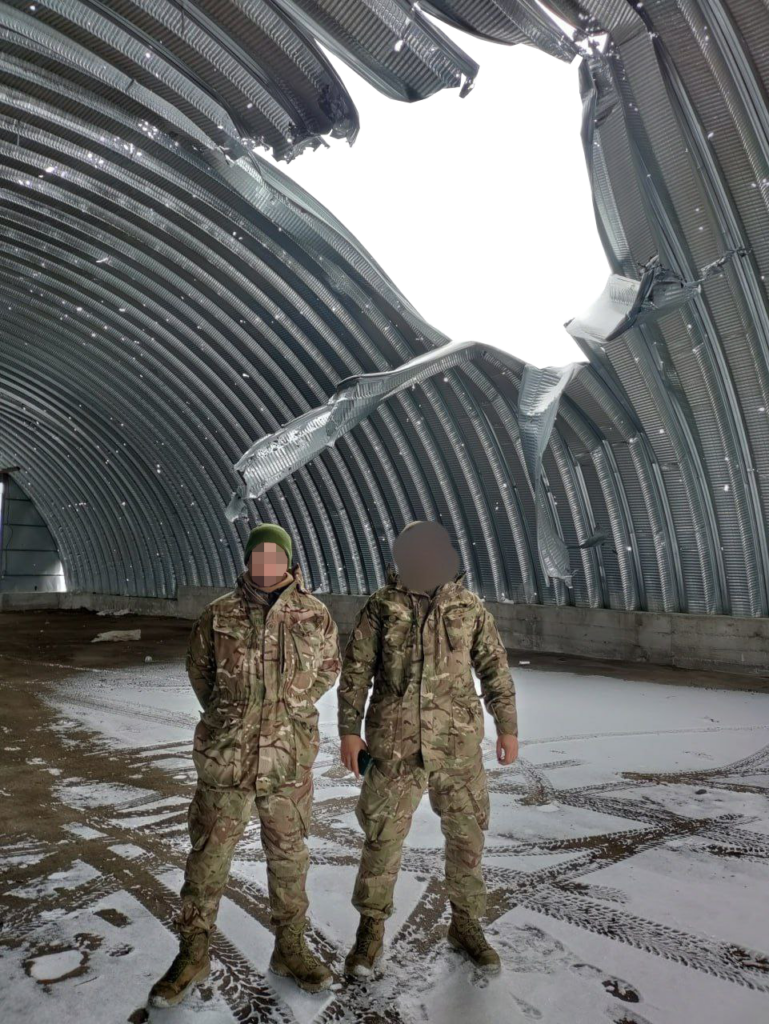
A new episode in our interview series about traumas and injuries highlights a problem of doctors’ and systems’ incompetence. This story is an example of incredible luck despite the circumstances.
Unfortunately, to this day journey of getting back on the track of normal life is basically narrowed down to a waiting game of systemic changes or outside support.
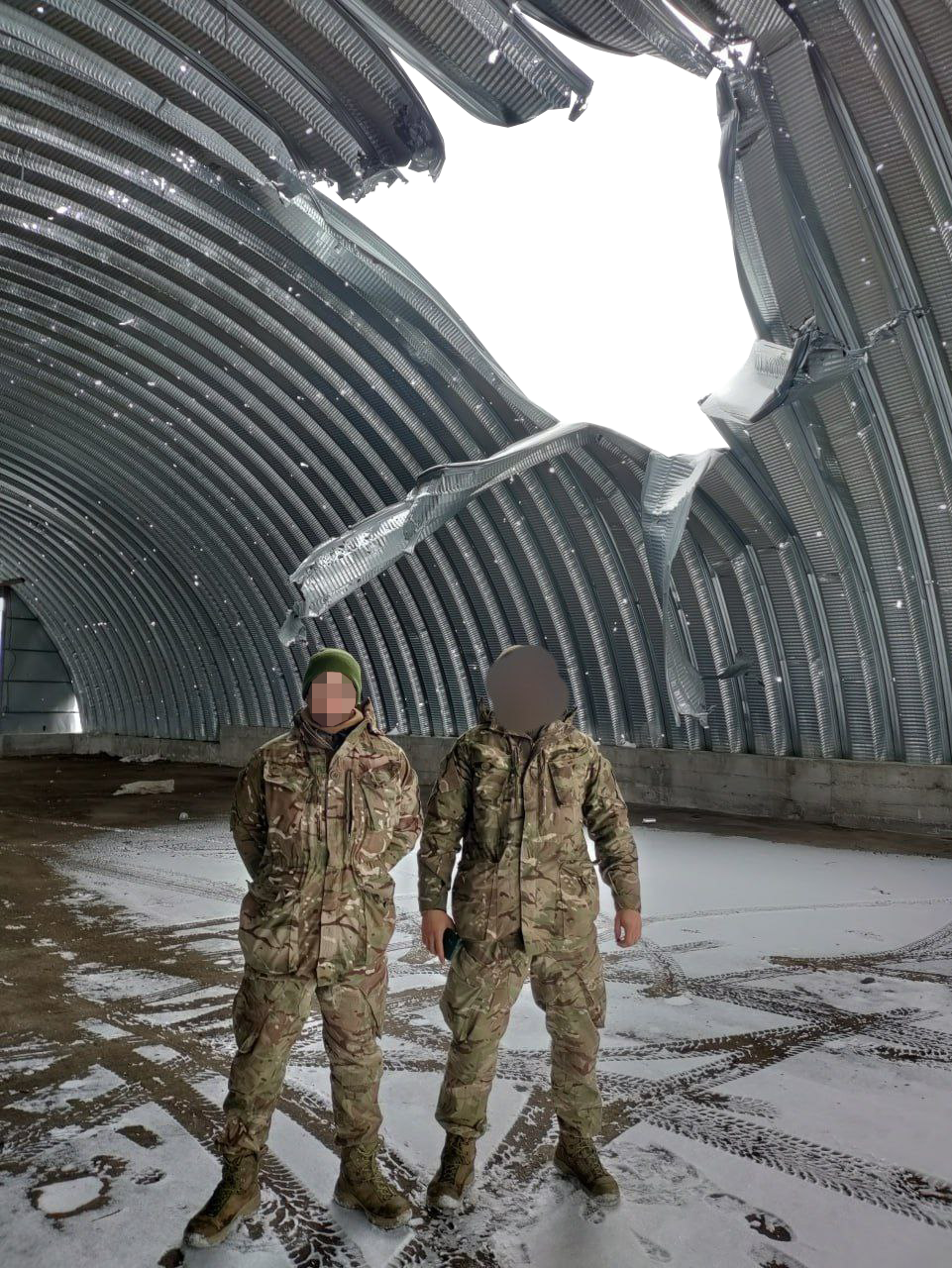
Let’s start with something simple. How did your day on duty usually begin?
When I was on duty, I would wake up at five in the morning in summer and six in winter because my work depended on daylight hours. I got up, did my morning routine, had breakfast if I had time and gathered what I needed. We loaded the car and left for work at around six. By seven, we were in position and ready to start work. That’s how my mornings usually went.
It’s all in the reconnaissance, right?
Yes, yes.
Could you tell us about the moment when you were wounded, and what was happening around you at the time?
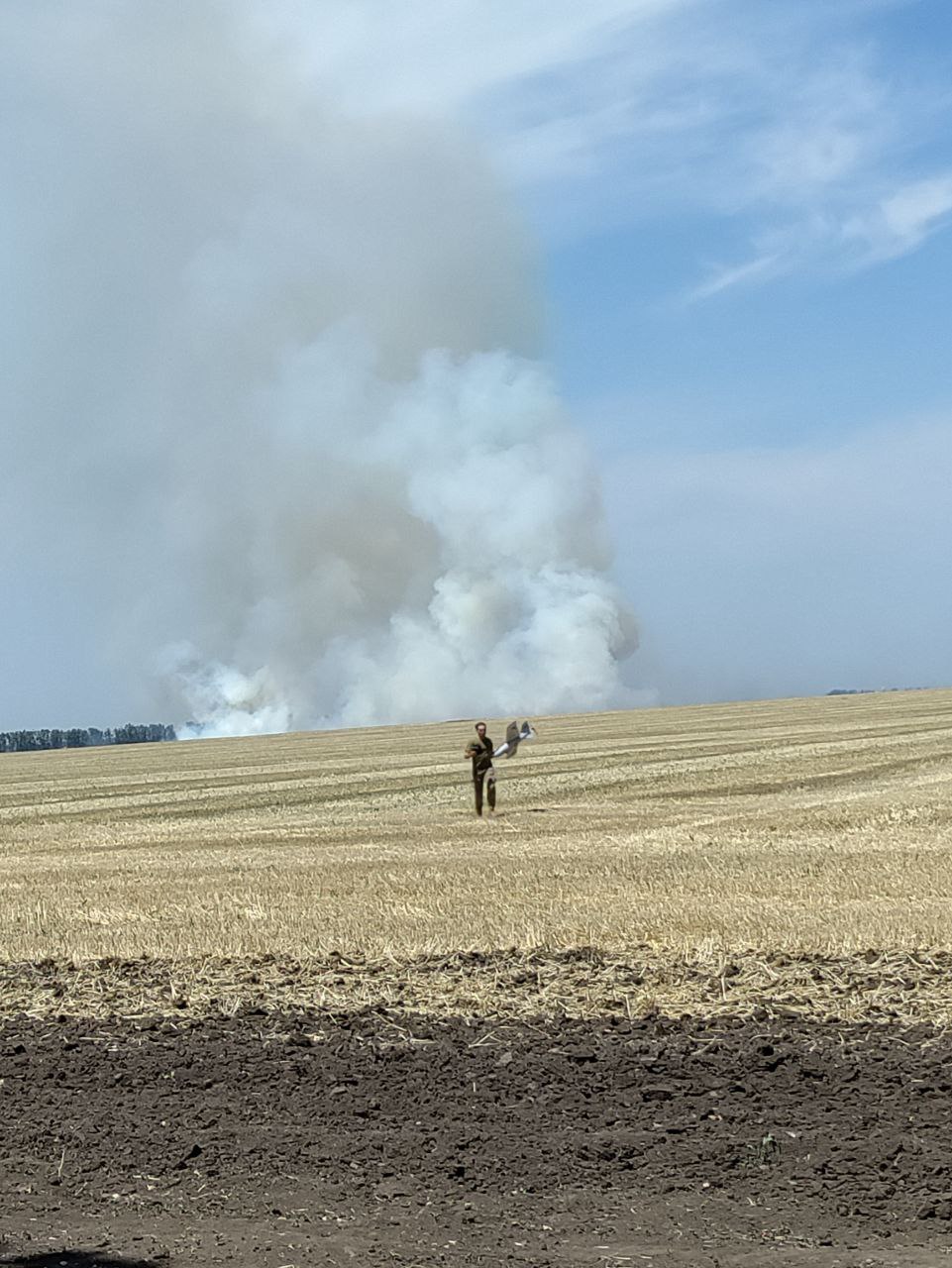
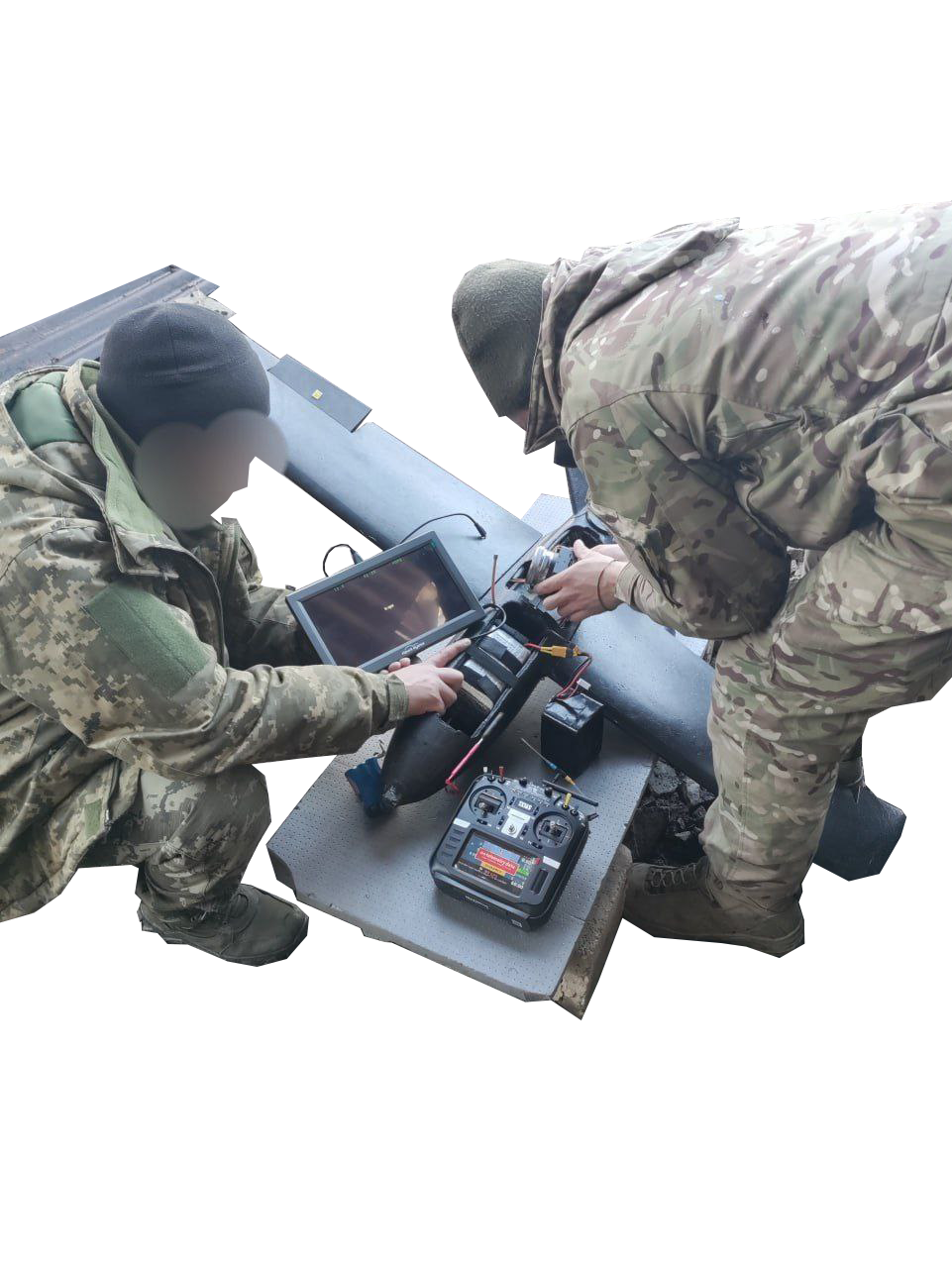
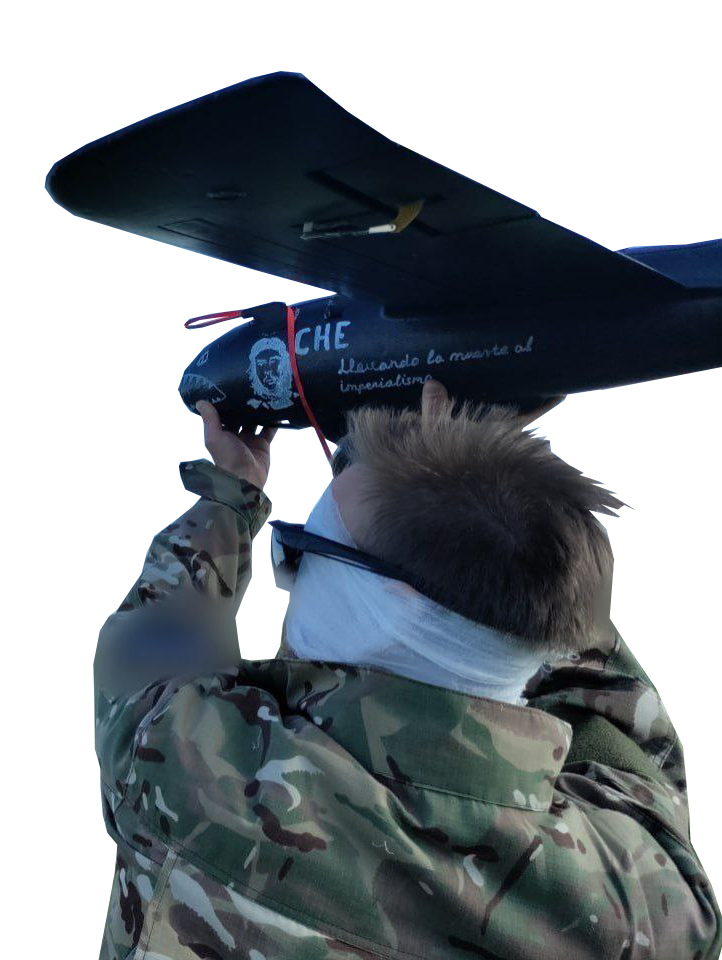
It was the night shift. Our task was to intercept air forces at night. The device itself had to be assembled separately before sunrise while visibility was still good. We were assembling several of these aircraft. We carried out the power supply and all the necessary take-off procedures right before take-off, when a target appeared in our zone.
We had been working in the Kherson sector specifically for a month. A target appeared that could be hit, but it was an enemy reconnaissance aircraft. Usually, when a reconnaissance aircraft appeared, there was an ‘air’ command, and everyone hid — either in a car or somewhere under a tent — so that we would not be spotted. All my guys hid, and I don’t remember if it was the commander’s order or if I decided myself that I could shoot down this target, that I had to launch the drone. I went to the drone, started it up and listened to the audio indicator to make sure that everything was normal and that the initialisation process was complete. I mapped out the route to the control point and what I would do there in my head.
I didn’t notice the explosion itself at all. I didn’t hear any sound or see any flash. Just a moment: I was planning to go to the command post when, the next moment, I found myself lying on the ground. I realised that I was wounded and started looking for blood. I examined my whole body, but I couldn’t find any bleeding. Then I checked my breathing to see if my lungs were punctured. I listened to my breathing; it was normal, and my lungs were intact. Well, that’s OK — I’ll live. On the one hand, that’s good. On the other hand, I had a feeling that something was wrong. I have taken several first aid courses, so I am familiar with this procedure, but something still didn’t feel right. My comrades ran up to me, examined me, then grabbed me and carried me to the pickup truck. They put me in the back, one comrade got behind the wheel, and the other sat with me.
It took about an hour to reach the stabilisation point. The roads were terrible, of course, and I felt dreadful during the journey. I was upset about being shaken around on those roads because the driver was pressing the accelerator to get me there faster. My comrade checked me over again to see if I was bleeding. The only sign of injury I noticed at the time was blood on my face. If there is head damage, then it’s either a deadly injury or just some scratches, so there’s no need to worry. I concluded that it was nothing serious. While they were driving me in thepickup truck, I tried to turn on my side because I had this MARCH* procedure in my head. I thought I should lie on my side so that if I lost consciousness, I wouldn’t choke. However, my comrade kept turning me onto my back so that he could examine me. I found this annoying. They took me to the stabilisation point. There, a medical worker asked me what my blood type was. I had previously had my blood tested three times to determine my blood type, and the results had been different each time. So I didn’t know my blood type, which made me more anxious. I thought, ‘What an awkward situation.’ But they did the test themselves, and it turned out fine.
An ambulance then took me to the hospital in city A. I really did have shrapnel in my head. One piece had pierced my skull and, as the neurosurgeon told me, had come within millimetres of my cerebellum. He said that if it had reached it, I would have died instantly. Another piece had pierced my glasses and lodged in my eye. I recently underwent an examination by the Medical and Social Expert Commission (MSEC), which assigned me a disability status because I had lost almost all vision in one eye. Some other pieces lodged in my ribs, and some got into my arm, severing nerves. Two of my fingers were not working properly. I also had abdominal injuries and some haematomas. The main treatment was for my abdomen. I received treatment for four months afterwards. That’s how I got injured.
*The MARCH algorithm is synonymous with Tactical Combat Casualty Care (TCCC). It is a simple acronym for remembering the necessary steps in priority for saving lives in combat. M-massive haemorrhage, A-airway, R-respiratory, C-circulation, and H-hypothermia.
Do I understand correctly that at that moment, both physically and emotionally, it was more of a kind of dissonance, disorientation, where you felt more or less calm yet uneasy because something didn’t add up?
Well, a little more context is needed here. The way you react to a stressful situation depends on your mindset before it occurs. This particular job was far from the zero line. In that sense, I wasn’t worried at all. However, there was an issue: if an enemy scout had found us, we would have been a high-priority target. There were even times when three enemy scouts flew right over us within five minutes. The danger comes from the air and from the enemy noticing you. So, as long as we don’t get noticed, everything will be fine. Basically, there were no signs of danger that evening. There was no suspicious activity.
It is not entirely clear what exploded there. The commanders reported that it was a grenade dropped from an enemy reconnaissance aircraft. While this is possible, others tell me that it was an explosion of the warhead of my interceptor, which is also probable.
I didn’t panic at all. My mind was occupied with work, duties and technical tasks that needed to be completed. As soon as I found myself on the ground, the MARCH algorithm kicked in. I just switched gears immediately. I don’t even remember realising that I was wounded. Why did I start doing all this? Because I don’t remember the moment of the explosion at all. I only remember lying on the ground looking for any signs of bleeding. That’s basically all I thought about. There’s simply an algorithm of actions that must be followed.
The only thing that annoyed me was when my comrade turned me over in the car. I was confused because, if I had been bleeding, I would have applied a tourniquet and calmed down. If there is bleeding, it will stop, and everything will be fine — you will live. I probably felt bad at the time, but I just didn’t notice that much. I was only thinking about what I had to do. Those were my concerns at that point.
That’s understandable, thank you. Which part of your treatment was the most difficult? Was it your stomach?
The most difficult part of this story, and probably of my entire service, is medical treatment. When I was taken by ambulance to the hospital, I was immediately put in intensive care and underwent surgery on my head, eye and stomach. I was given painkillers on the way and fell asleep. I woke up in intensive care. The room was clearly a hospital room, and I was lying on a hospital bed naked. I had no idea what was going on. For almost a month, nobody had told me anything about my condition. I thought to myself: OK, I’m in the hospital, they’ll patch me up, and then I’ll go back to the guys.
I didn’t have any means of communication because when I was wounded, my phone was in the bag on my chest, and it stopped one of the shrapnel fragments. It wasn’t working very well before as it was already quite old, but after that incident, it was totally unusable. This was an extremely unpleasant situation, especially for a soldier. I had been serving for over a year at that point, and wherever I was and whatever the circumstances, I needed to be able to stay in touch. Either my commander might want to tell me something, or I might need to report something. Communication is always essential. Day and night, under any circumstances. But now, I was unable to communicate with my commanders, comrades, or family.
The discomfort was compounded by the fact that the intensive care unit was a single room filled with wheelchairs and various beds equipped with machinery that beeped constantly. The constant beeping was incredibly nerve-wracking and tiring, and there was nothing you could do about it. As I had just had abdominal surgery, I was not allowed to eat or drink anything. All nutrients were administered to me through an IV. But very soon I became thirsty, and I started asking the nurses and other medical staff who were nearby for something to drink. They told me, ‘You can’t.’ I said, ‘Just a little, not much.’ I was extremely thirsty. I understand that everything is administered through an IV, but surely something isn’t right if I’m thirsty? You can’t administer everything intravenously. Thankfully, one orderly or nurse understood my situation and filled a tiny bottle with water. It had a very narrow neck. She let me take a few sips to wet my throat. I was in the hospital in city A for two or three weeks — I don’t remember exactly how long. The whole time I was there, I dreamed of sweet black tea. The kind they serve in school cafeterias. I wanted it so badly.
Finally, I managed to get in touch with my family. My brother and my wife came to see me. On the same day, I was transferred to city B. Again, to intensive care. My brother had bought me another phone so I could keep in touch, but phones are prohibited in intensive care. I was surprised by this and couldn’t understand it. I explained, ‘Look, I was carrying out a combat mission, I was wounded, and now I’m being treated. Why can’t I just pick up the phone and call my family? I’ve been lying here alone for almost a month. I want to communicate somehow.’ But they would not allow it. I remained in intensive care for another two weeks, then they transferred me to the hospital ward. My relatives, my mother and my wife came to visit me in the hospital. They stayed in city B and visited me constantly and helped me a lot.
However, it turned out that I did have some issues with my abdominal injury. There was some kind of infection. At first, they put in drains, but that didn’t help as I still had inflammation and fever. They examined me and decided that I needed surgery. So I had another surgery. After that, I had to go through recovery again. At that point, I couldn’t even walk. I could get up and sit down, but walking… I only walked because the doctors told me to. I walked around the ward, around the floor, about 50 metres a day while they held my arms. Sometimes they took me outside on a wheelchair for a short walk. Again, it was a strain. How much more could I take? Just patch me up and let me go. But that’s how it goes. After the surgery, I arranged to be transferred to city C. I’m from there, as is my family, so it would be closer to home and more convenient for everyone. My wife was already pregnant at the time.
By that time, the wound had already healed. I was sitting in my room eating dinner when I noticed that my shirt was wet. I lifted it to see if I had spilled something. I looked down and saw pus flowing from my stomach. When the doctor arrived, he examined me, called the nurse and gave me two injections of anaesthetic. The doctor immediately started cutting my stomach, but I don’t think the anaesthetic had time to take effect. It didn’t work at all. It was a very strange sensation. They were literally cutting me alive. They performed the surgery, and then I went for dressing change visits while I was recovering. During one such appointment, the physician informed me that further incisions were necessary. Without giving me anaesthetics, he just took his surgical knife and started making the incision. The second time was the same. They even said, ‘Why are you screaming? Why are you swearing?’ Then it was back to the cycle of recovery and changing bandages until the next time, when they needed to clean something in the wound. Once again, [the doctor] just took his metal tool and started scraping the wound.I was scared to go for wound care because I knew that if it was just the nurse, she would just do the dressing and nothing more. But if the doctor came in to examine me, he might start cutting me again. I have even sought help from a psychologist about it.
The most telling moment for me came some time later. About three weeks after all the butchering at the hospital, I went to the barbershop for a haircut. The barber there uses a straight razor. When she approached me with the razor, I was shaking and felt scared. It’s like PTSD or something.
Of course, this is quite fertile ground for trauma.
I didn’t develop a fear of knives. At the time, it was very painful and unpleasant. But time passed, and it all merged into an unpleasant memory of the hospital. Once, when all my wounds had healed, I was sent for rehabilitation. There is a rehabilitation centre right in that hospital where I was referred for physiotherapy. At first, we did some exercises and walked around the hospital, then we started going outside. That’s how I recovered. I went with the doctor to a shop 700 metres away, which is quite a long way for me. I had to walk there and back.
But my fingers still haven’t recovered. They hardly bend at all. At the rehabilitation centre, I worked with another doctor to regain their function. The rehabilitation lasted a little over a month. After that, I was discharged. I think it was just before the New Year.
Were you able to restore mobility to your fingers?
I managed to restore partial mobility. My left hand was injured, but my right hand was intact. Now, when I compare my left and right hands, there is no comparison at all. I have completely different control over my fingers. Even though I can bend them and grab something, the strength in the fingers of my left hand is significantly less. However, it’s a damaged nerve, and it’s getting better with exercise. I’ve noticed that, even in everyday life, my left hand is improving bit by bit. It hasn’t fully recovered yet, but it’s much better than it was initially. As I said before, I wasn’t able to bend them at all.
Does this mean that there are still many things that remind you of the injury? Because you haven’t fully recovered yet?
I can’t say that I get reminded about it. I’ve changed, albeit only partially. I have a huge scar on my head where it was stitched up and covered with skin, but there’s no bone behind it. My brain is right there. I can hardly see out of one eye. Before the injury, that eye had better vision and was my dominant eye. Now it can hardly see anything.
Needless to say, the consequences are noticeable. But I adapted to it physically within the first few months of being discharged from the hospital. I work, I have a family and a small child. The only thing that is very different from my life is that I did not have issues with alcohol before the injury. Now, alcohol is strictly forbidden for me. In the first few months after leaving the hospital, and often while I was still in the hospital, I couldn’t sleep at night and had flashbacks about my service. I relived that evening, the injury and the circumstances. Well, it’s psychological.
Otherwise, as I said, I live a fulfilling life.
Did your family help you cope with your emotional distress after your injury? You also mentioned that you saw a psychologist. Did you undergo therapy, or did you go to find out if you had PTSD and what to do next?
I came specifically because they operated on me without anaesthetic, which has left me with a strong fear of surgeons and bandages. Yes, I met with this psychologist several times.
What would she say? You need to go for dressings. You have to, that’s all. Don’t worry or don’t overthink it. That’s all. Well, okay then.
You said that you live a fulfilling life. Does that mean you don’t need any additional support, for example?
It depends. For example, in everyday life — at home, with my child — I can manage on my own. At work, I simply have no choice. There are certain tasks that only I can perform. Sometimes I realise that someone without injuries like mine would be better at doing them. But I can’t entrust these tasks to anyone else. Now that I have a family, I will probably also have limitations. For example, I want to buy a car, but I understand that I will most likely not be able to drive it. I can hardly see out of one eye. I will have to encourage my wife to get her driving licence. Otherwise, though, I’m doing fine.
Got it. Have you come across any issues with the rehabilitation approach or treatment? What do you think could be changed or improved?
I had a very decent rehabilitation. I can’t even say anything negative about it because, in that centre, everything was fine with the equipment and there was everything you might need. The doctors were professional, kind and pleasant. I don’t know — I have no complaints about the rehabilitation.
What about treatment?
Firstly, I don’t understand why you can’t use your phone in intensive care or have visitors. I was there for a month, and my relatives weren’t allowed to see me. They would take me out of the ward so that I could talk to my family. Some patients might not need it for medical reasons, but this could be handled on a case-by-case basis. Why do they cut off everyone’s contact like that? Any contact. People are already in a tough spot because they’re in intensive care. It’s serious. But it turns out that not even their family can support them in that situation.
Does that mean that in your case, your relatives were simply not allowed to visit? Or did they not know anything until you contacted them for the first time?
The commander had only told them that I was on a mission and they took my phone away.
Oh, so they didn’t even tell them that you were in the hospital recovering from your injury?
No, they weren’t informed that I’d been injured and was receiving treatment in intensive care. Of course, they didn’t know. It was only later, when I managed to reboot my phone, which had been damaged by shrapnel, that I called my brother to briefly explain where I was and what had happened. None of my relatives knew about it. What if my phone had been completely destroyed? In that case, my relatives wouldn’t have known that I was in the hospital. I suppose that’s just how it is.
The second issue was that the hospital food really annoyed me. They had already allowed me to eat, but they brought me some kind of slop — threw everything they could find into a pot and called it soup.
Another thing is that they operated on me without anaesthetic. That also remains a mystery to me. Do doctors just enjoy cutting people open and making them suffer? It’s strange.
Of course, doctors can be different. In city B, I had a doctor like that. I think he was my attending physician. He was a surgeon by training. He was a young man, about my age. He came in and started acting all high and mighty, lecturing me. He said that I needed to shave. I told him that I didn’t want to, that it was my style and that I always had a beard and moustache and liked it that way. But he said that these are the rules and that I have to shave. What can you do? Oh well, I shaved. There are many nuances when you simply don’t trust a doctor who starts with mundane questions and then acts like a jobsworth. Sometimes the doctor wants to show that he’s in charge and tell you what to do. He comes to me and says, ‘You’re in the military, right?’ I said, ‘Yes, I’m in the military.’ “Are you a soldier?” “I’m a soldier.” Then he says, ‘If I were in the army, I would be an officer.’ He tells me this, and I listen. “Well, why aren’t you in the army then?” Join the army and become an officer. What’s your problem? You’re not in the army.’ So, things like that.
Though there are some really great doctors and medical staff. During my treatment, I developed a deep respect for the nurses and orderlies. I have a lot of appreciation for their work, because it can be very difficult. They are often completely overworked, yet they are indispensable. Without them, nothing would get done.
It seems that you also had a rather unique experience, as you were able to observe this system in three different locations.
Mostly just two, because I didn’t pay much attention to anything in city A. I was simply in such a state of mind that I neither had the opportunity nor the desire to observe anything there or take note of anything. But then in city B and C — yes. I watched, compared, and realised that it was good that I lived in C and not in city B.
If I’m not mistaken, you also want to organise a podcast interviewing soldiers who have also been wounded, right?
Yes, I suggested this idea. I still want to do it. But now I am beginning to realise that I may not be able to get this done. It takes a lot of energy, time, and even money. I just don’t have enough of these resources, even for my own work. My idea was to interview military personnel who have encountered problems in the service, not necessarily just wounded soldiers. The issues they face are very diverse. Many simply go AWOL. At the first opportunity, as soon as they leave their position, they hand in their weapon, and that’s it, goodbye. I don’t have the energy to deal with that kind of stuff. I want to help these soldiers, at least by getting their stories out there. Maybe that publicity can help them access legal or financial assistance, whatever else they need. I just see that no one is doing anything about it, that most of the attention is focused on the army’s combat operations. Apart from combat operations, though, a lot goes on in the service that is practically not covered. If someone encounters problems, particularly from the command or systemic problems in general, it is almost impossible to solve them on your own.
I am not religious, so I think it’s incredible luck that I didn’t die, even though the chances were there. At the same time, I was injured badly enough to be discharged from the army, which is really significant. When I was discharged at the beginning of the summer, I received a document stating this, and I was travelling from the unit by bus. I was so cheerful! It was an unbelievable feeling of freedom, knowing that from that day onwards, I would no longer have to report to anyone or provide daily updates on my whereabouts and activities. No one would give me orders any more. If someone in civilian life starts treating me like a slave in that army style, I can tell them to get lost. But in the army, I can’t do that. In the army, I have no choice at all.
All I could do was carry out my combat duties. Even if I do so without complaint, someone can still nag, lecture and boss me around while I have to stand at attention and salute. Not having to do that is an extremely pleasant feeling.
Of course, it is striking that it is still, to some extent, a privilege to be discharged on health grounds. We have discussed support for other soldiers and military personnel. What is your opinion of veterans’ organisations, for example? Do you consider them to be a source of support for the military?
As I have not yet been in contact with any veterans’ organisations, I am unable to comment on this.
What about providing decentralised assistance to the military in general?
Of course, this is probably easier than trying to get something from the state. You can help those in need yourself. In my view, this is how relationships in general should be built, and working relationships should also be horizontal. The same applies to all social relationships.